
On this page
A bulbous nose is identified mainly by the shape of the nasal tip, not by the overall size of the nose. From the front, the tip may look broad and softly rounded; from the side, the transition between bridge and tip may be less sharp. Lighting, camera distance, expression, and skin texture can all change that impression, so one close selfie is not a reliable test.
Bulbous nose at a glance
A bulbous nose usually describes a nose whose tip looks rounded, full, or less sharply defined. It is an appearance label, not a diagnosis, and can occur with a narrow, average, or wide nasal base.
| Feature | Typical appearance | What it does not prove |
|---|---|---|
| Tip | Rounded, full, or softly defined | That the whole nose is large |
| Base | May be narrow, average, or wide | That it is automatically a wide nose |
| Bridge | Can be low, straight, or high | A specific ethnic background |
| Skin | May be smooth or textured | A medical condition by appearance alone |
Use several neutral photos. Shape labels are descriptive and can overlap.
What is a bulbous nose shape?
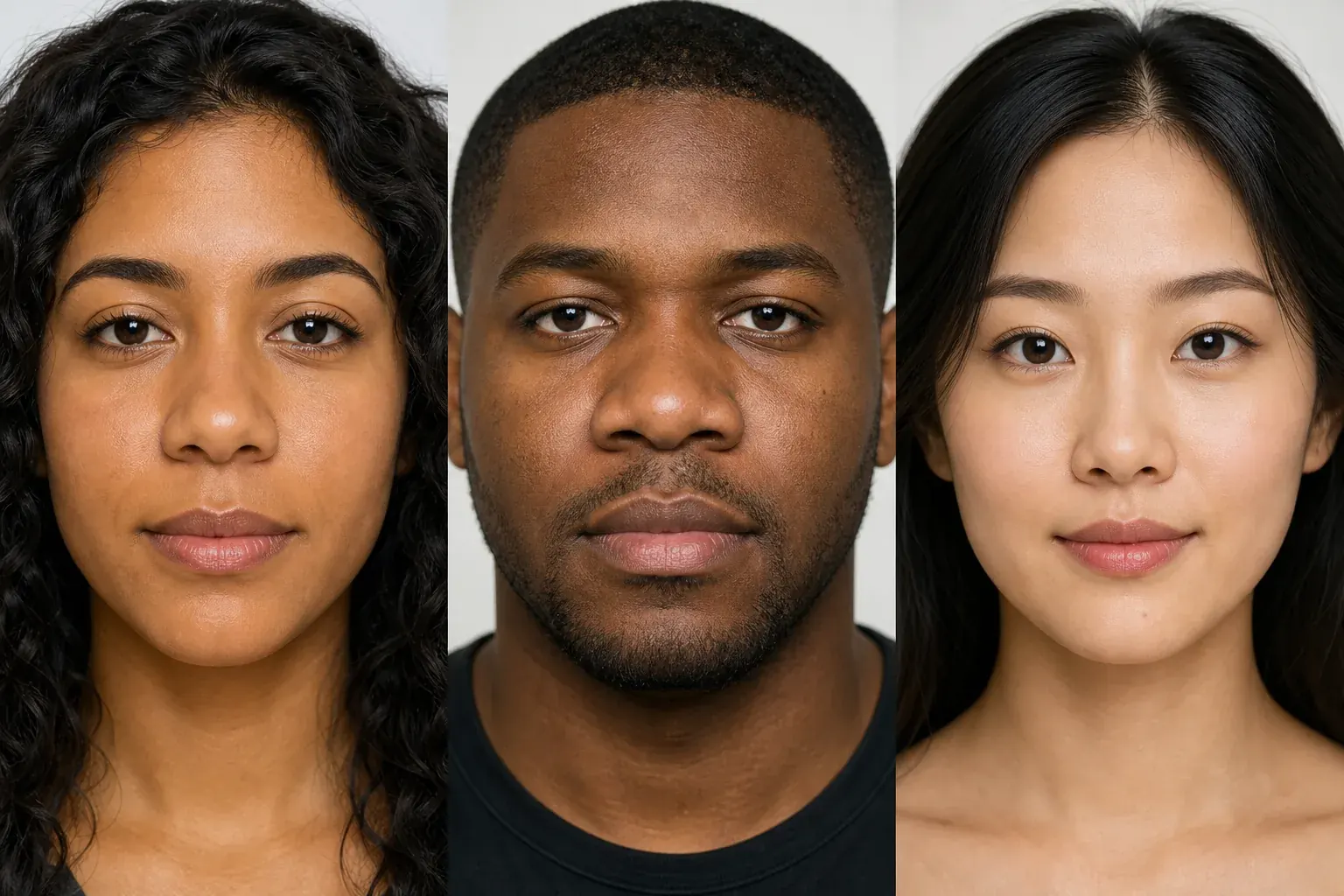
The defining feature is a rounded or fuller nasal tip. The tip may look circular or softly squared from the front, with less separation between the tip-defining points than on a sharply sculpted nose.
This does not mean the nose is unattractive, unhealthy, or unusually large. A bulbous tip can sit below a straight bridge and narrow nostrils.
Bulbous tip vs wide nose vs button nose
A bulbous nose is tip-led: roundness is concentrated near the end. A wide nose is width-led: the bridge, alar base, or nostril span is dominant. A button nose is usually smaller, shorter, and more upturned.
These categories can overlap. Separating the tip, bridge, and base gives a more accurate description.
What makes a nose look bulbous?
Natural cartilage shape, tip support, skin thickness, and the relationship between the tip and nostrils influence definition. These are normal anatomical variations and cannot be diagnosed from a photo.
A phone held too close enlarges the central face. Strong frontal light flattens shadows, while a low angle can make the nostril base look wider.
How to check the shape in photos
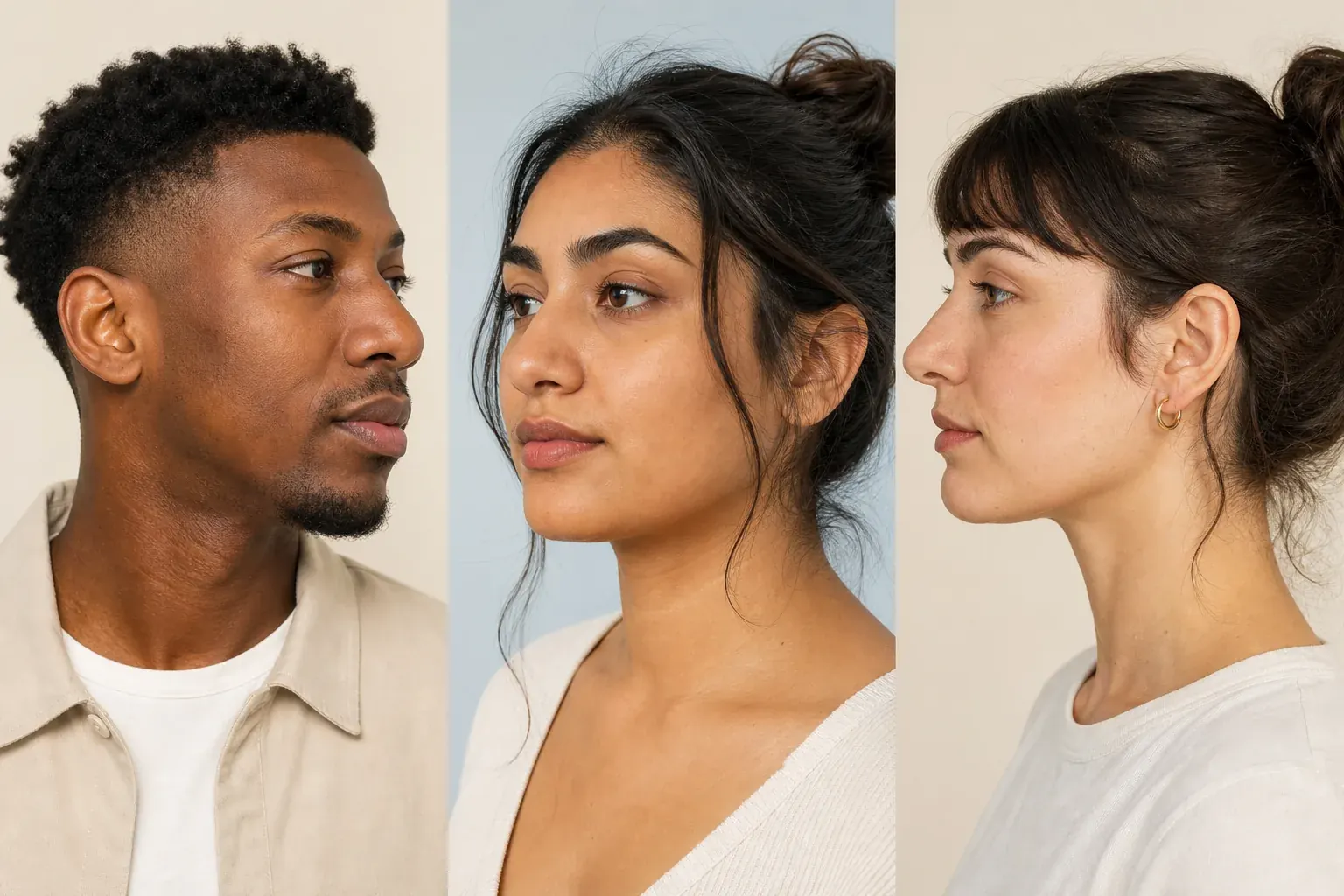
Place the camera at eye level and at least an arm's length away. Compare front, three-quarter, and side views with a relaxed face and no beauty filters.
Ask whether fullness remains centered at the tip or whether the entire nose is wide. Consistency across angles matters more than one measurement.
Similar nose shapes and overlapping labels
A rounded tip can occur with a straight, Roman, or low bridge. A wide nose emphasizes base width; a snub or button nose emphasizes short length and upward rotation; a Nubian nose emphasizes a longer bridge and broader base.
A two-part description such as 'straight bridge with a rounded tip' is often the most useful.
When a rounded tip is more than a shape label
A naturally rounded tip that has looked similar for years is usually a shape description. New or progressive redness, thickened or bumpy skin, enlarged pores, pain, swelling, or breathing difficulty deserves professional assessment.
Rhinophyma is a medical skin condition that can make the nose gradually enlarged, red, bumpy, and bulb-like. It should not be assumed from ordinary tip roundness or diagnosed through an online guide.
Five-step self-check
Use consistent photo conditions for a more stable comparison.
- Remove filters and use even daylight.
- Keep the lens at eye level and at least an arm's length away.
- Take front, three-quarter, and side photos with a relaxed face.
- Compare tip roundness separately from bridge height and nostril width.
- Repeat on another day before choosing a label.
The detector provides an appearance-based estimate, not medical advice or a beauty score.
Frequently asked questions
Medical context and references
- Clinical overview of rhinophyma and progressive skin changes that differ from a stable nose shape. Cleveland Clinic: Rhinophyma
- Patient information on rhinoplasty, including enlarged or bulbous nasal tips and individual assessment. American Society of Plastic Surgeons: Rhinoplasty
Last updated: July 16, 2026