
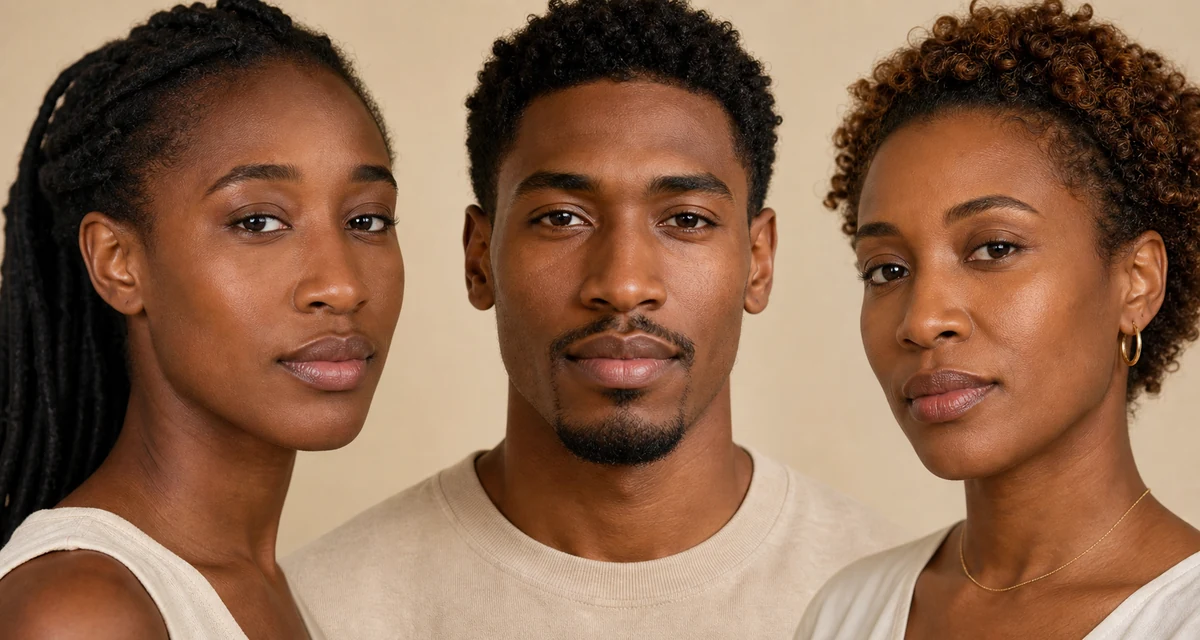
The term Nubian nose appears in beauty guides, portrait analysis and searches about different nose shapes. It is useful only as a visual description, not as a rule about ancestry, personality or attractiveness. A good identification looks at several connected traits: how long the bridge appears, whether the bridge is flat or projected, how wide the base is relative to the face, the outline of the nostrils and the direction of the tip. Camera distance and head angle can change all of these clues, so this guide uses front and side views together.
What Does a Nubian Nose Look Like?
No single measurement defines the category. Most visual references use a combination of the following features, with natural variation in every one of them.
Longer bridge
The bridge often looks medium to long from the brow area to the tip. It may be straight or gently sloped, creating more vertical length than a short button or snub nose.
Broader base
The nostril base commonly appears wider than a narrow Greek or straight nose. Width should be judged against the distance between the eyes and the overall face, not from a cropped nose photo.
Soft nostril shape
The nostrils may look rounded or softly flared rather than pinched. Natural asymmetry is common and does not change the basic category.
Balanced tip projection
The tip is often rounded with moderate projection. It is usually less sharply rotated upward than a celestial or snub nose and less heavy at the tip than a strongly bulbous nose.
The most reliable pattern is a longer bridge plus a broader base. A wide base by itself may fit a wide or flat nose better, while a long bridge by itself can also appear in straight, Roman or aquiline profiles.
Nubian Nose vs Flat, Wide and Bulbous Nose
These labels overlap because they describe different parts of the same structure. The table focuses on the dominant feature that usually separates each category.
| Nose type | Bridge | Base and nostrils | Tip and profile | Best clue |
|---|---|---|---|---|
| Nubian | Usually medium-long and visible in profile | Broad, often softly rounded | Balanced or gently downward | Length and width appear together |
| Flat | Low or less projected from the face | Often broad | Profile looks shallow | Low bridge projection |
| Wide | Can be short, medium or long | Width is the dominant feature | Tip varies | Broad base relative to the face |
| Bulbous | Any bridge height or length | May be narrow or broad | Full, rounded or enlarged tip | Tip volume dominates |
| Celestial or snub | Usually shorter | Often moderate | Clearly upturned with more nostril visibility | Strong upward tip rotation |
If your bridge is clearly long and projected while the base is also broad, Nubian may be the closest descriptive label. If the bridge sits low and shallow, flat nose is more precise. If the tip is the fullest part, bulbous may be the better match.
How to Identify a Nubian Nose in Your Photos
Use ordinary, undistorted photos rather than one close selfie. A phone held too near the face can enlarge the nostrils and tip while shortening the apparent bridge.
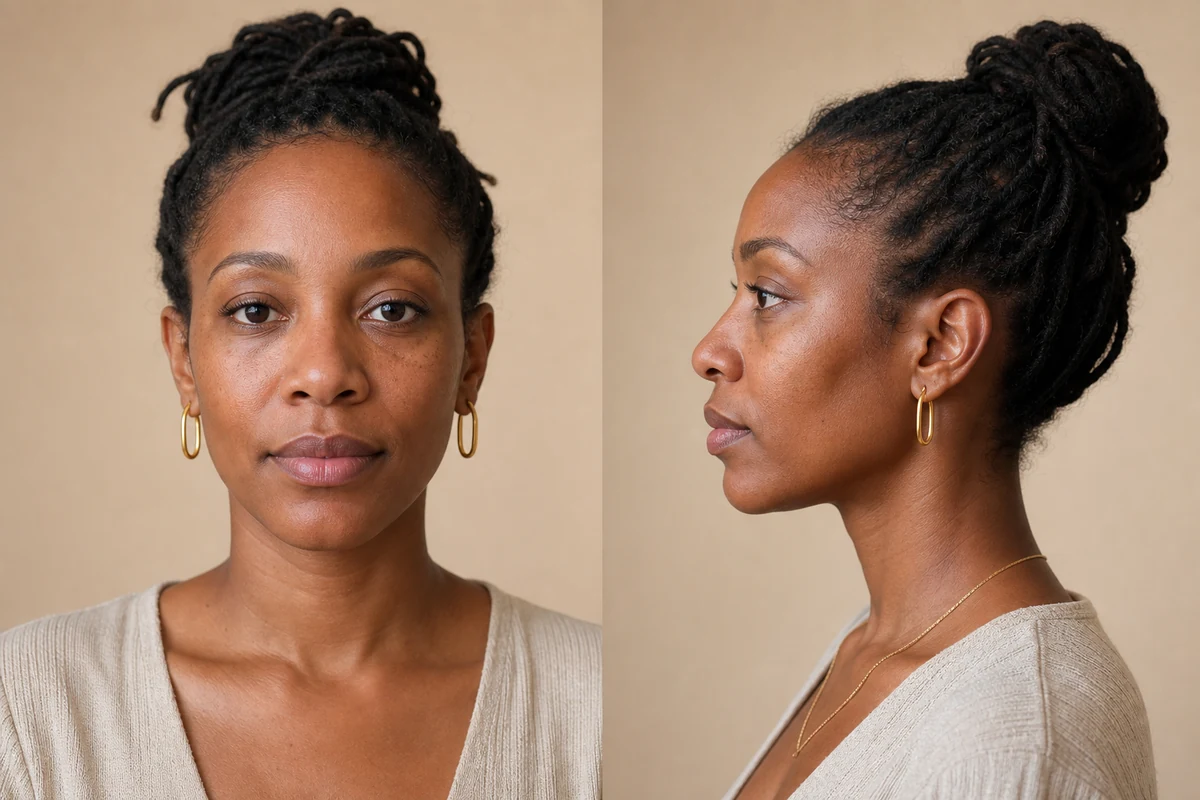
- Take a front-facing photo from about an arm's length away, keeping the camera near eye level and your expression relaxed.
- Take a side-profile photo without turning only your eyes or lifting your chin. The bridge outline should be visible from brow to tip.
- In the front view, compare the nasal base with the inner eye corners and cheek width. Do not classify the nose from nostril width alone.
- In profile, check whether the bridge is long and clearly projected rather than low and shallow. Then note whether the tip is balanced, downturned or strongly upturned.
- Compare the combined pattern with Nubian, flat, wide and bulbous descriptions. If two categories fit, use a mixed description instead of forcing one label.
AI results are an appearance estimate, not a medical measurement or a statement about ethnicity. Use clear photos and read the feature explanation behind the label.
Does a Nubian Nose Mean a Specific Ethnicity?
The name is historically associated with Nubia, a region along the Nile in present-day southern Egypt and northern Sudan. Modern beauty and morphology lists use the term more broadly for a visible combination of a longer bridge and wider base. That popular usage is inconsistent and should not be treated as a scientific ancestry test.
People from the same family or population can have very different bridge heights, lengths, base widths and tip shapes. Similar features also occur across many African, Middle Eastern, South Asian, European, Indigenous and mixed-heritage populations. A nose shape cannot confirm nationality, race or genetic background.
The label also says nothing about character or beauty. Makeup, glasses and portrait choices can work with any nose by considering proportion and personal preference. If you are researching breathing, injury or surgery, visual categories are not enough; speak with an appropriate medical professional.
Use Nubian nose as a descriptive shortcut for visible structure, never as a stereotype or a value judgment.
Nubian Nose FAQ
References and context
- Smithsonian Human Origins explains how human facial features reflect complex adaptation and variation rather than simple racial categories. Human evolution and variation
- Encyclopaedia Britannica provides historical and geographic context for Nubia and the Nile region. Nubia overview
Last updated: July 10, 2026