
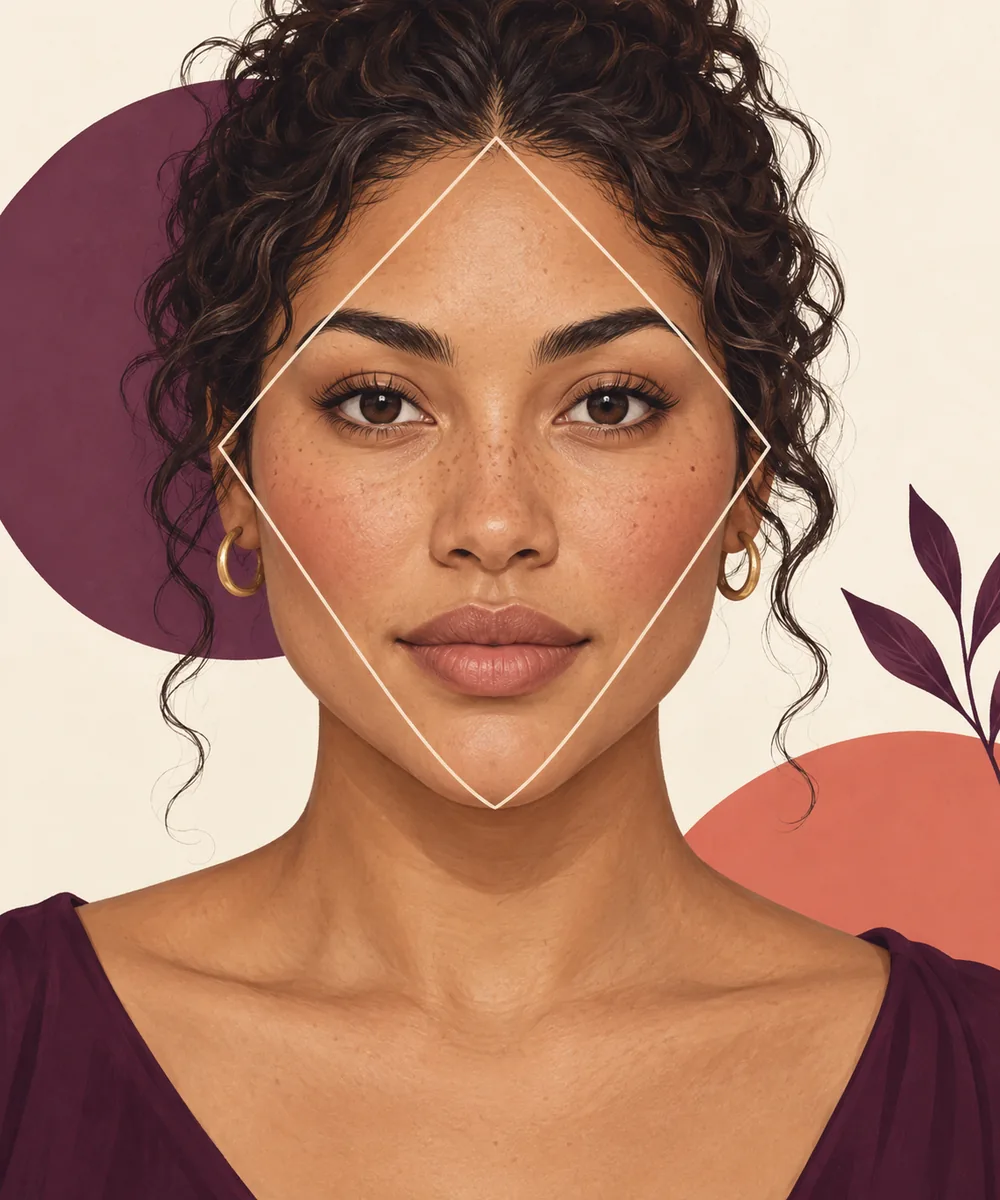
A diamond face shape is a proportion pattern, not a beauty standard. The clearest clue is usually the cheekbones: they extend farther than the forehead and jaw, while both ends taper inward.
People often search for a diamond face shape hairstyle or glasses guide after noticing prominent cheekbones, a narrow hairline, or a pointed chin. A close selfie can exaggerate all three, so check more than one image.
This guide compares diamond, heart, and oval patterns, then gives a repeatable self-check. Treat the category as flexible: blended results can still guide frames, hair volume, or measurements.
What a diamond face shape looks like
In a typical diamond outline, the cheekbones are widest, while the forehead and jaw narrow toward the ends. The side outline may change direction around the cheekbones, but the jaw can still be soft.
Look at the full outline rather than the chin alone. A narrow chin also appears in heart-shaped faces, so central width plus a relatively narrow forehead and lower face is the stronger clue.
Cheekbones lead the width
The cheekbones extend farther outward than the forehead and jaw. This central width is the strongest diamond-versus-heart clue.
Look for: the widest points across the middle of the face.
Forehead is relatively narrow
The forehead may be narrower at the temples or hairline than the cheekbones. It can still be rounded or gently curved.
Look for: less upper-face width than cheekbone width.
Jaw and chin taper inward
The lower face narrows from the cheekbones toward a smaller, rounded, or pointed chin.
Look for: a jaw that does not stay as broad as the middle of the face.
The sides can look angular
Prominent cheekbones may create a visible change of direction before the jaw narrows, although lighting can soften it.
Look for: a cheekbone-to-jaw transition, without treating asymmetry as a problem.
A diamond face shape is a proportion pattern. It does not describe attractiveness, health, personality, ancestry, or identity, and the category does not need to fit a perfectly symmetrical geometric drawing.
Diamond vs. heart, oval, and other face shapes
Diamond and heart faces are often confused because both can have prominent cheekbones and a tapering chin. Start with the widest area, then check forehead, length, and jaw.
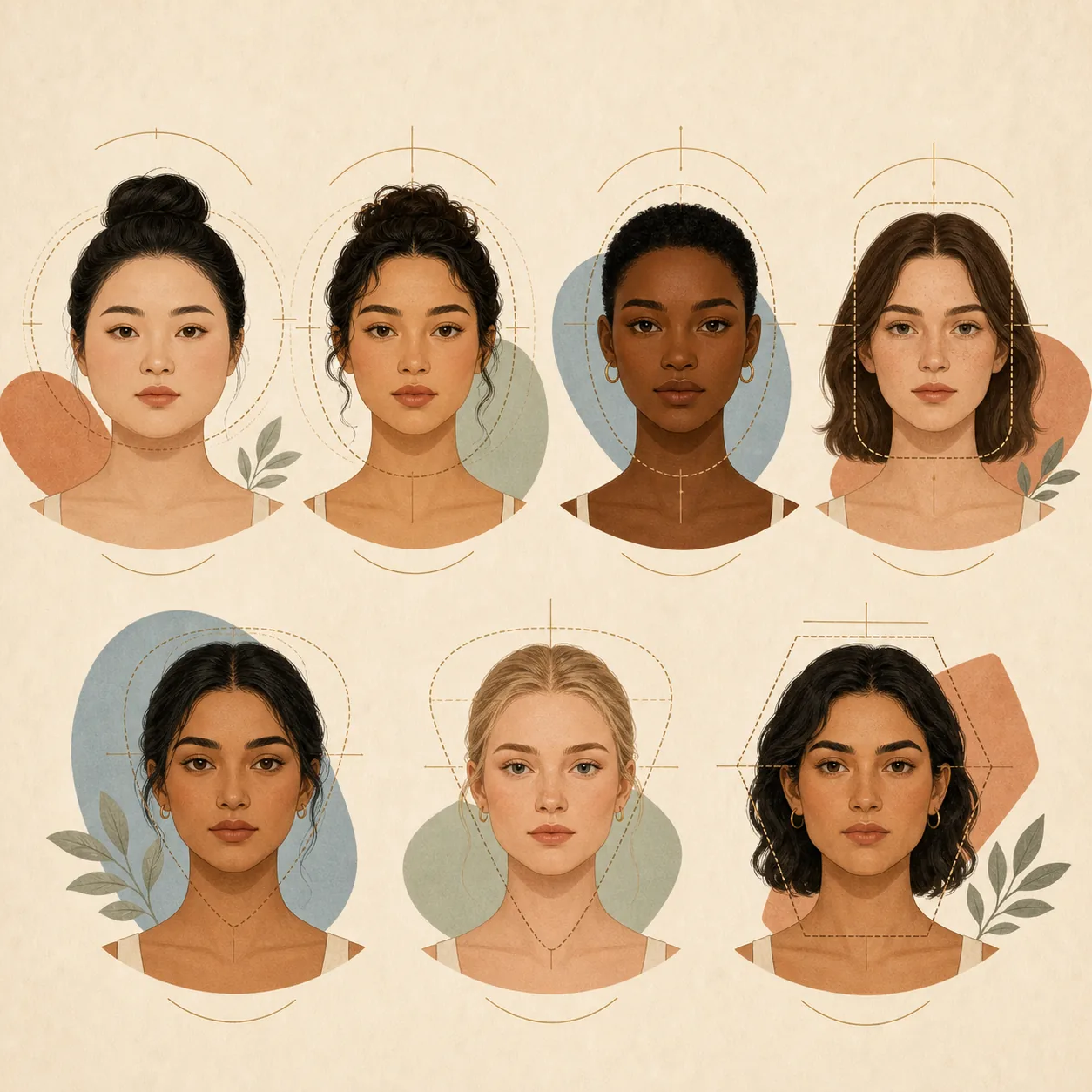
| Face shape | Widest area | Lower-face clue | How it differs from diamond |
|---|---|---|---|
| Diamond | Cheekbones | Jaw and chin narrow inward | Central width is the defining pattern |
| Heart | Forehead or upper cheekbones | Narrow or pointed chin | The upper face is usually wider than the cheekbones |
| Oval | Cheekbones, but softly | Gentle taper with a rounded chin | Transitions are smoother and the forehead is often more balanced |
| Round | Cheeks or cheekbones | Curved jaw and shorter-looking chin | Length and width feel closer, with fewer angular changes |
| Square | Forehead, cheeks, and jaw are similar | Broad, defined lower face | The jaw stays wider instead of tapering strongly |
| Oblong | Width stays fairly even | Longer face with less central emphasis | Length is more obvious than cheekbone dominance |
| Triangle | Jaw | Lower face carries the visual weight | The widest area is below the cheekbones rather than at them |
Clearly widest cheekbones with extra length may be diamond-to-oblong. A broad forehead plus a sharp chin may be heart-to-diamond.
How to tell if you have a diamond face shape
A mirror check and four measurements are more stable than one close selfie. Move hair away from the temples, use even light, keep your head level, and relax your expression.
Record forehead, cheekbone, jawline, and total face length from consistent landmarks. Numbers reveal the widest area, but jaw angle and chin shape still matter.
- Move hair, glasses, and strong contour makeup away from the sides of the face.
- Compare cheekbone width with the forehead and jaw; diamond patterns usually peak at the cheekbones.
- Check length. Extra length may suggest a diamond-to-oblong blend; less length can overlap with heart or oval.
- Inspect whether the jaw narrows toward a small chin or stays broad.
- Repeat with a neutral photo or mirror view if the first image was tilted, shadowed, or very close.
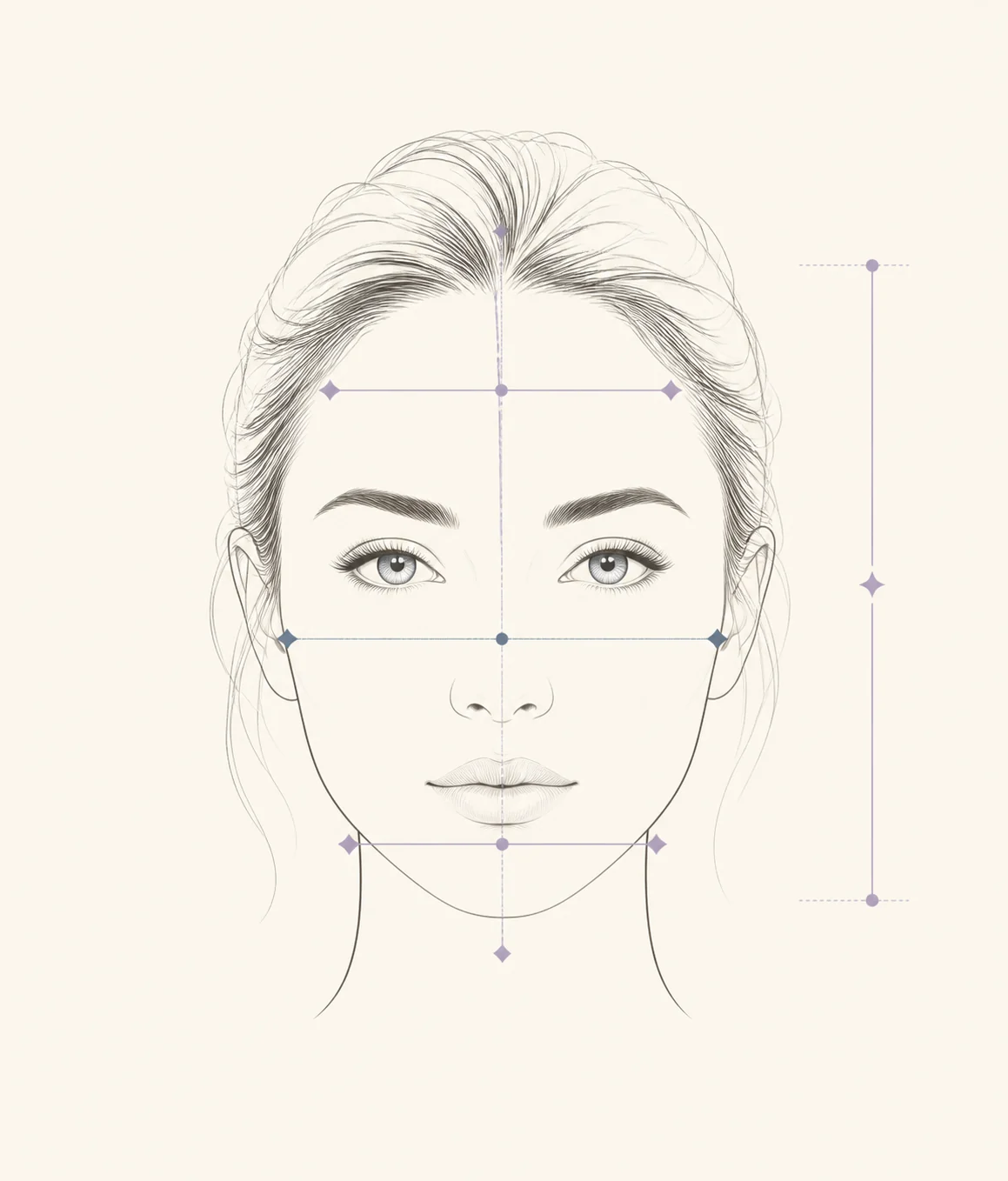
The result can be a blend such as “diamond with oval length” or “heart with diamond cheekbones.” That wording preserves the useful clue without pretending that face shapes have hard biological borders.
Diamond face shape hairstyles, glasses, and styling ideas
Styling advice is a menu of options, not a rulebook. Decide whether you want volume, movement, or structure, then use the diamond pattern as context.
Soft layers, side movement, or volume near the forehead and jaw can create a gradual transition around prominent cheekbones. Pulled-back hair can highlight them instead. Texture, length, and taste matter most.
Hair volume
Volume near the forehead or jaw can soften the visual peak at the cheekbones. Side layers, soft fringe, or jaw-level texture are options, not requirements.
Short and long cuts
Short cuts can highlight cheekbones; longer layers can add movement around the jaw and neck. Choose for texture and maintenance as well as proportion.
Glasses
Gentle curves, moderate width, or a lighter lower edge can be starting points. Confirm bridge, lens, and temple measurements for real fit.
Beard and makeup
Use gradual shape and shading rather than trying to redraw the face. A soft lower edge changes emphasis without hiding natural variation.
If glasses are your main goal, use the face shape detector for glasses for a photo-based starting point, then confirm real frame measurements and comfort before buying.
Photo and measurement limitations
A close selfie may widen the center, a high angle can shorten the lower face, and side lighting can sharpen cheekbones. Hair, glasses, and facial hair also interrupt the outline.
Use a front-facing image from a little farther away, near eye level, with soft light. Compare the silhouette, not attractiveness. If a detector and manual check disagree, try a second image.
- Keep your head level and face the camera directly.
- Use a neutral expression and move hair away from the outline.
- Avoid close wide-angle selfies, harsh shadows, and heavy contour makeup.
- Use repeatable landmarks and the same unit when measuring.
- Treat the label as educational, never as a medical, identity, ancestry, or attractiveness assessment.
Frequently asked questions
What is a diamond face shape?
It is usually widest at the cheekbones, with a narrower forehead and jaw or chin. The outline can be soft or blended.
How is diamond different from heart?
Heart shapes usually keep more width across the forehead or upper face. Diamond shapes put the strongest width at the cheekbones, with both ends relatively narrower.
Can a face be both diamond and oval?
Yes. A face may have diamond-like cheekbone width with the longer, softer transitions of an oval or oblong face.
What hairstyle works for a diamond face shape?
Soft layers, side movement, or volume near the forehead and jaw are common starting points, while pulled-back hair can highlight the cheekbones. Choose for texture and taste.
What glasses suit a diamond face shape?
Gentle curves, moderate width, or a lighter lower edge can be starting points. Confirm bridge, lens, temple, and comfort measurements before buying.
Should I use a face shape detector or calculator?
Use the detector for a quick photo estimate and the calculator for measurements. Read either result with the visible outline and its limitations.
The practical way to use a diamond face shape label
Start with the widest area: diamond patterns usually peak at the cheekbones, while the forehead and jaw narrow inward. Confirm the impression with a level photo or repeatable measurements, compare the result with heart and oval patterns, and allow for blends. For hairstyles or glasses, treat the label as a flexible starting point and let comfort, hair texture, fit, and personal style make the final decision.