
On this page
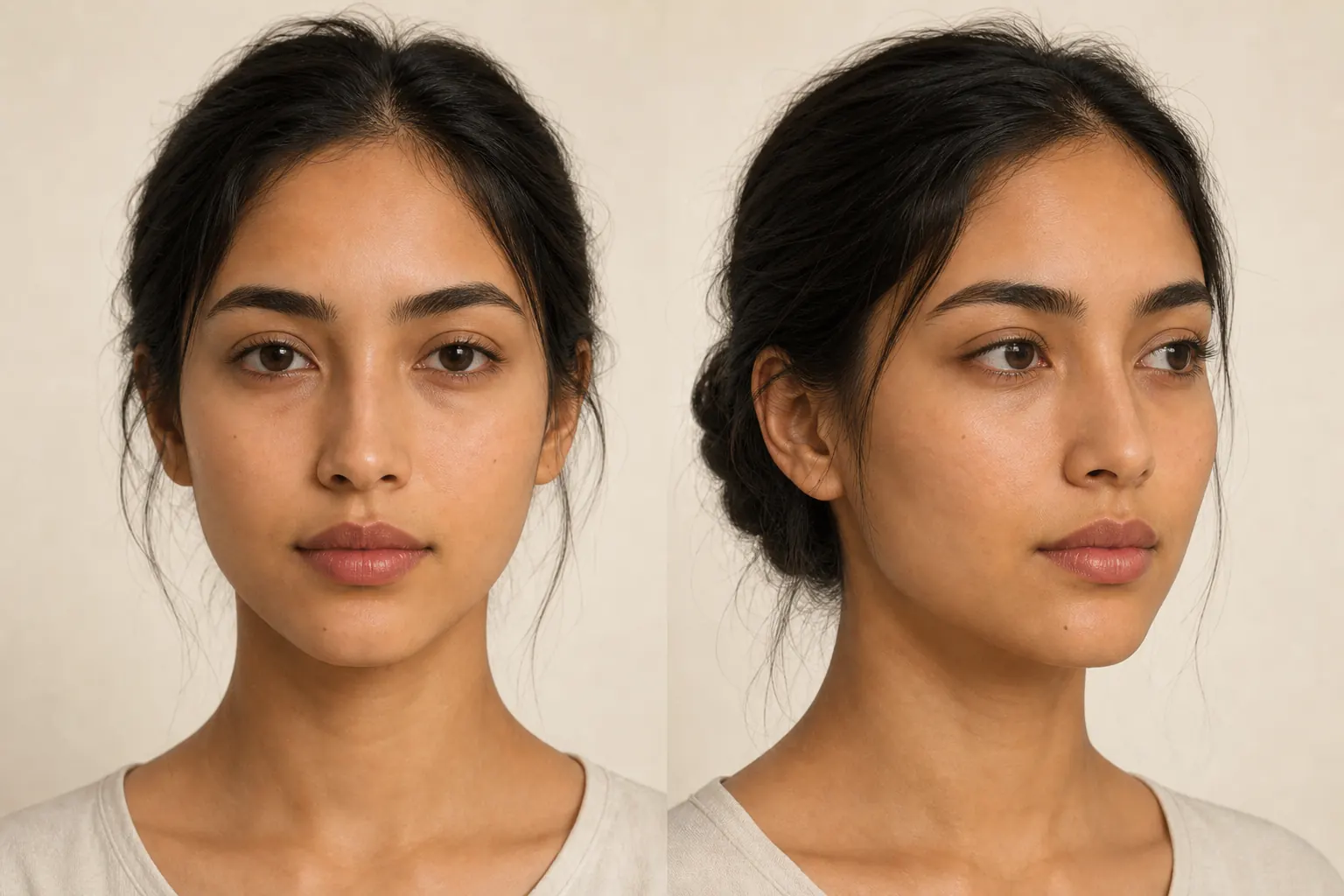
A narrow nose shape is a width-led description, not a beauty ranking or a medical diagnosis. In everyday use, people usually mean that the bridge, middle third, nostril base, or the full nose appears relatively slim. The most useful check compares several angles and separates width from bridge height, bridge line, tip size, and photo distortion.
Narrow nose shape: the key characteristics
Use the pattern below as a visual framework. One clue alone cannot prove a nose label.
| Feature | What may look narrow | What it does not prove |
|---|---|---|
| Width | The bridge, middle third, or base appears slim relative to the face | It does not prove the nose is small or delicate |
| Bridge line | The sides may run straight, curved, or slightly concave | Narrow does not mean straight |
| Bridge height | A narrow bridge can be low, medium, or high | Width does not determine projection |
| Tip fullness | The tip may be pointed, rounded, or softly full | A narrow base does not rule out a bulbous tip |
| Photo pattern | The impression remains similar across neutral angles | A close selfie can exaggerate narrowness |
Think of narrowness as one coordinate on a nose-shape map. A complete description needs at least width, bridge profile, projection, and tip shape.
What does a narrow nose mean?
A narrow nose shape generally has less visible horizontal width than the surrounding facial proportions. The narrowest area may be the upper bridge, the middle third, the nostril base, or more than one of these areas. That is why two people can both have a narrow nose while looking quite different in profile.
Narrowness is also different from a value judgment. Natural facial features vary with bone, cartilage, soft tissue, age, expression, lighting, and camera distance. Use the label to describe a visual pattern, not to decide whether one nose is better than another.
Width is the main clue
Compare the visible width with the inner eye area and the rest of the lower face, without treating a single ratio as a rule.
Several combinations are possible
A narrow nose may also be straight, upturned, aquiline, flat at the bridge, or rounded at the tip.
If the nose only looks narrow in one crop or one strong shadow, repeat the check with a neutral image before choosing a label.
Narrow nose vs straight, high, small, flat, and wide noses
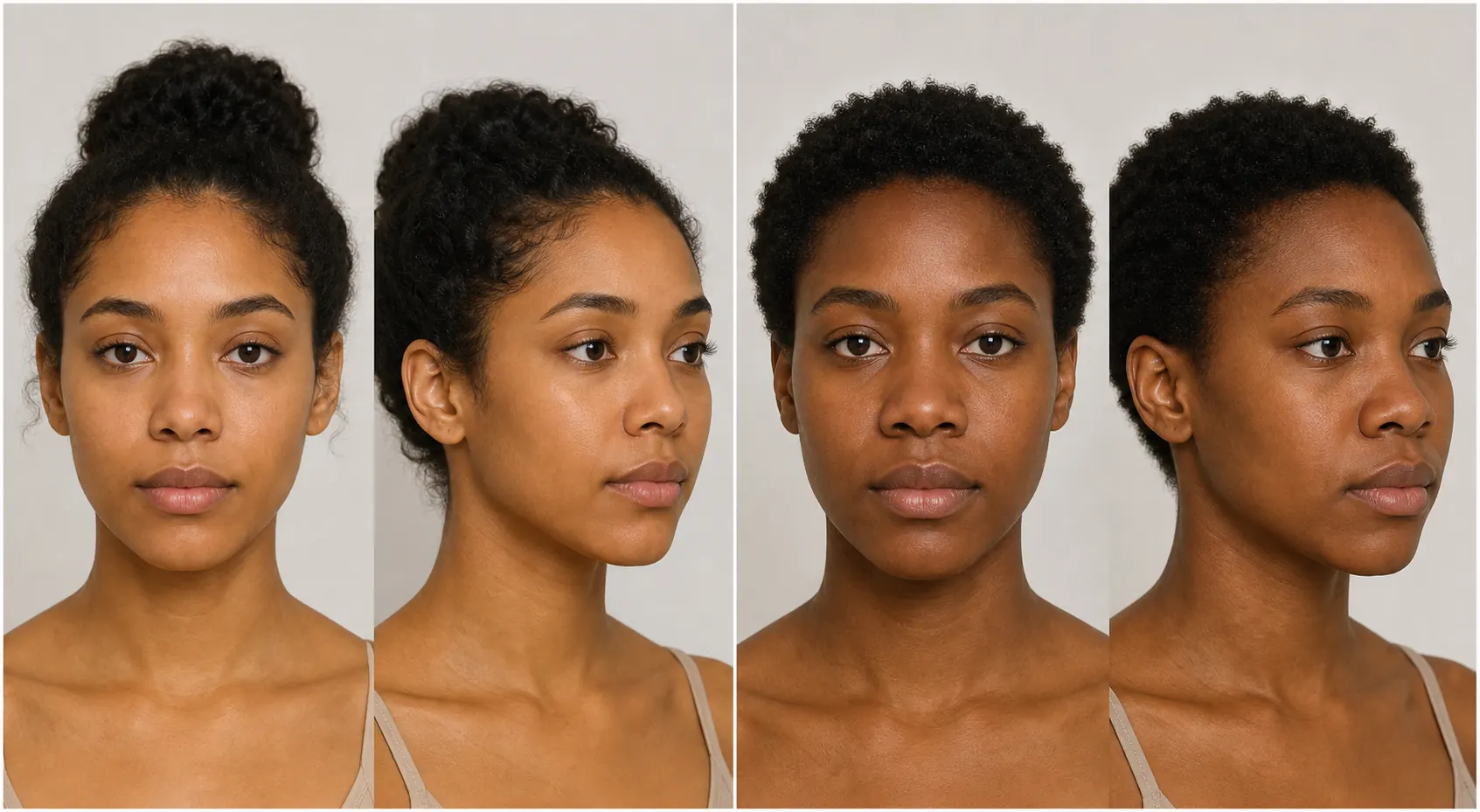
The phrase narrow nose is often mixed up with other nose-shape terms. Straight nose describes the direction of the bridge line; high nose describes bridge height or projection; small nose describes overall scale. These can overlap with narrowness, but none is a synonym for it.
A wide nose is the clearest width contrast, while a flat nose usually emphasizes a lower bridge or lower projection. A bulbous nose focuses on a rounded or full tip, and a button nose focuses on a compact, rounded appearance. A narrow nose can share one of these traits without becoming the same category.
Narrow vs straight
A narrow nose may have a straight bridge, but straightness is a profile-line question. See the straight nose guide for bridge curvature.
Narrow vs high
A narrow bridge can be low or high. Bridge height should be assessed from profile, not inferred from front width.
Narrow vs small
A nose can be slim in width while still being long or prominent. Overall size and width are separate observations.
Narrow vs wide or flat
Wide usually refers to more horizontal width; flat usually refers to lower bridge height or projection. Compare both dimensions.
How to check a narrow nose in photos
Start with a front-facing photo taken at eye level, with the camera a comfortable distance away and no portrait-mode crop. Look for a stable impression of width across the bridge, middle third, and base. Then use a three-quarter or profile image to check whether the bridge is straight, curved, low, or prominent.
Avoid deciding from a very close selfie. Wide-angle phone lenses, a tilted camera, strong side lighting, smiling, and facial expression can change the apparent width of the nose. Glasses, contour makeup, and a cropped frame can do the same.
Front view
Check the bridge and nostril base against the face, while keeping the head level and expression relaxed.
Profile view
Check bridge height, projection, and tip direction. Profile confirms different traits; it does not replace a width check.
Repeat the pattern
Use two or three neutral images from different days or cameras before treating narrowness as a stable description.
A photo can support a descriptive self-check, but it cannot establish a medical diagnosis or determine what appearance is ideal.
Glasses fit, camera distortion, and practical context
When nose pads or a bridge feel too wide or too narrow, the issue is usually frame geometry and fit rather than a definitive nose-shape label. A professional optician can adjust pads, bridge width, and frame position. Do not use the fit of one pair of glasses as proof that your nose is narrow.
For a more consistent photo check, place the camera farther away, keep it at eye level, use even light, and avoid extreme wide-angle modes. The goal is not a perfect measurement; it is to reduce avoidable distortion before comparing width and profile clues.
If you are considering a cosmetic procedure or have pain, breathing changes, injury, or sudden swelling, use a qualified clinician for advice rather than an online shape label.
Five-step narrow nose self-check
Use this short process to decide whether narrow nose is a useful description for your photos.
- Choose a neutral, front-facing photo taken from a normal distance, without a heavy filter or contour makeup.
- Compare width at the bridge, middle third, and nostril base instead of looking only at the tip.
- Check a three-quarter or profile view to record bridge height, bridge line, projection, and tip direction separately.
- Repeat the observation with another neutral image so a lens, shadow, or expression is less likely to dominate.
- Use a combined description such as narrow and straight or narrow with a rounded tip, then open the relevant guide for the second trait.
The detector is educational and may reflect more than one visible characteristic.
Narrow nose FAQ
References
- The NIH Elements of Morphology describes nasal bridge anatomy and nearby landmarks. NIH Elements of Morphology
- Cleveland Clinic provides general rhinoplasty information for the medical and surgical boundary. Cleveland Clinic
Last updated: August 2, 2026