
On this page
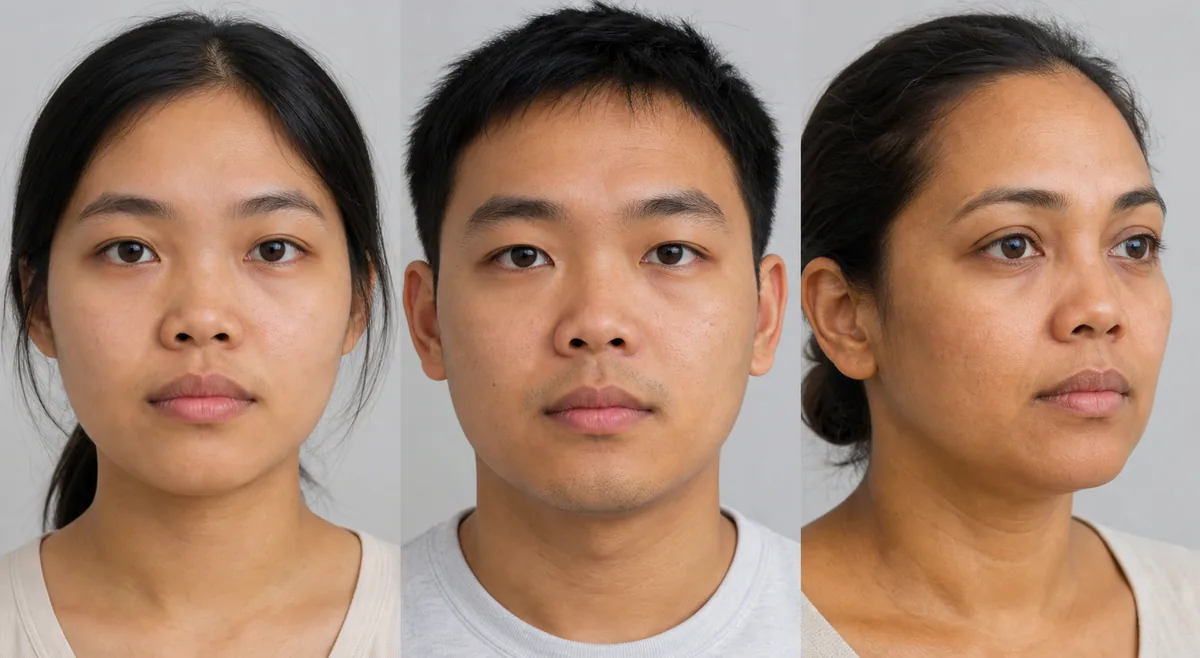
Flat nose is an everyday appearance term, not a precise diagnosis. It usually points to a lower nasal bridge and reduced projection from the face. From the front, the nose may also appear broad, but width alone does not define the shape. A side view, a three-quarter view, and a front photo taken from a sensible distance give a more reliable answer than a close selfie.
Flat nose shape at a glance
The main clue is a low or less prominent bridge. Check projection from the side before judging width from the front.
| Feature | Typical appearance | Important distinction |
|---|---|---|
| Bridge | Low, smooth, or less defined between the eyes | Bridge height is not the same as bridge width |
| Side profile | Less outward projection from the face plane | A short nose can still have a higher bridge |
| Front view | May appear broad with softer shadows | Not every wide nose has a low bridge |
| Tip and nostrils | Can be rounded, neutral, or slightly upturned | Tip shape does not determine bridge height |
Describe bridge, base, and tip separately. That is more accurate than forcing every nose into one label.
What is a flat nose shape?
A flat nose shape generally describes a nose with a low nasal bridge and modest projection. The bridge is the upper section that begins between the eyes and continues toward the tip. When it sits closer to the face plane, the transition from forehead to nose looks gentler in profile.
The term does not mean that the entire nose is literally flat. The tip and nostrils still project, and their shape may be narrow, rounded, broad, or upturned. It is also not a beauty score or a reliable way to infer a person's background.
Low nasal bridge, flat nose bridge, and width are different clues
Bridge height describes how far the upper nose stands away from the face. Projection describes the overall forward reach of the nose. Width describes the horizontal span of the bridge, alar base, or nostrils. One person can have a low narrow bridge, while another has a low bridge and a wider base.
The NIH morphology terminology notes that a depressed or recessed bridge can occur regardless of bridge width. This distinction helps prevent a common mistake: calling every broad nose flat or every low bridge wide.
Flat nose vs wide nose, Nubian nose, and button nose
A wide nose is width-led: the bridge, base, or nostril span is the strongest clue. A flat nose is bridge-led: lower height and reduced profile projection are the strongest clues. The two traits often overlap, but neither automatically proves the other.
A Nubian nose usually combines a longer bridge with a broader base and more forward or downward tip projection. A button nose is usually shorter and smaller with an upturned tip. A useful description may therefore be 'low bridge with a rounded tip' or 'low bridge with a broad base' rather than a single category.
Flat nose
Prioritize bridge height and side-profile projection.
Wide nose
Prioritize horizontal width at the bridge, base, or nostrils.
Nubian nose
Look for a longer bridge paired with a broad lower base.
Button nose
Look for short length, a compact tip, and upward rotation.
How to identify a flat nose shape in photos
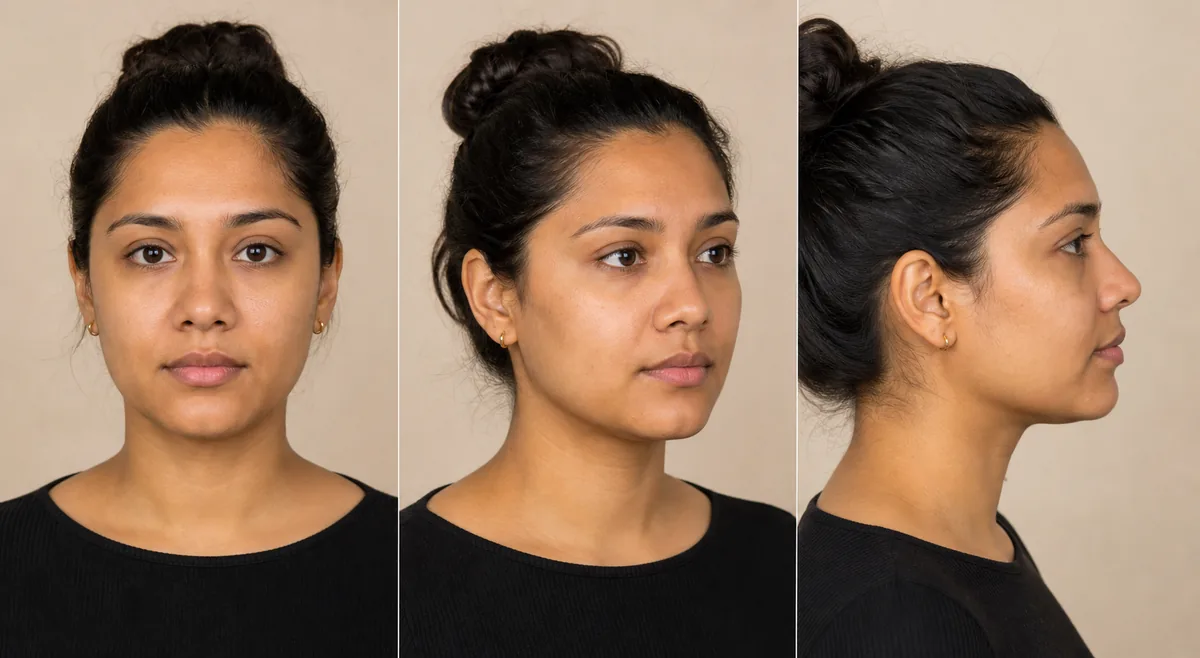
Use even daylight and place the camera at eye level about an arm's length away. Take front, three-quarter, and true side views with a relaxed expression. In profile, check where the bridge begins and how strongly it projects between the eyes. In the front view, notice width separately rather than using it as the deciding clue.
Close phone cameras can enlarge the center of the face, while bright frontal light removes the shadows that define a bridge. Compare several neutral photos and a mirror view before choosing a label.
Low bridge glasses and everyday fit
People with a lower bridge sometimes find that standard glasses slide, touch the cheeks, or sit too close to the eyelashes. Frames sold as low-bridge fit may use wider or adjustable nose pads, a different bridge angle, and more cheek clearance.
Fit is individual. Frame width, temple length, pad position, and lens weight matter as much as nose shape. An optician can adjust many frames, so the label is a starting point rather than a guarantee.
A flat nose is often normal variation—new changes need context
A stable low bridge that resembles family features is commonly a normal variation. The MedlinePlus definition focuses on flattening of the upper part of the nose and also notes that normal variation is one possible context.
An online appearance guide cannot diagnose a congenital condition, injury, or breathing problem. Seek qualified medical advice when the bridge changes after trauma, the nose becomes newly collapsed or asymmetric, breathing is difficult, or you have concerns about a child's development. Do not infer a condition from one facial feature alone.
This page describes appearance. It does not diagnose health conditions or recommend cosmetic treatment.
Five-step flat nose self-check
Separate the three dimensions before choosing a nose-shape label.
- Remove beauty filters and use even daylight.
- Keep the camera at eye level and at least an arm's length away.
- Compare front, three-quarter, and side views with a relaxed face.
- Judge bridge height first, then base width and tip shape separately.
- Repeat with another photo session before deciding which description fits best.
The detector offers an appearance-based estimate, not a diagnosis, ancestry test, or beauty score.
Frequently asked questions
Anatomy and health context
- Standard morphology terminology separates bridge position from bridge width. NIH: Nasal Bridge, Depressed
- Medical overview of a low nasal bridge, normal variation, and reasons to seek professional advice. MedlinePlus: Low nasal bridge
Last updated: July 25, 2026